


Plantar Fascia Pain and Tendonitis
The first few steps after getting out of bed should not be the hardest part of your day. Pain under the heel, through the arch or at the back of the ankle can change how you walk, work and exercise. At Seaview Health Group in Beaumaris, our podiatry and osteopathy team assesses plantar fascia pain and tendon problems and helps you decide what to change now and how to rebuild activity over time.
Why Has the Pain Started?
Heel and tendon symptoms can follow a change in walking, running, jumping or time spent standing. A new pair of shoes, a return to exercise after a break or a rapid increase in training can be relevant. Foot shape or gait may contribute for some people, but one visible feature of the foot does not explain every case.
Your practitioner will ask when symptoms began, what happens during and after activity, and how pain affects the rest of your day. Assessment may include the foot and ankle, calf strength, walking and movements linked with your work or sport. Imaging is not always needed for a typical presentation. If the story or examination suggests another cause of heel pain, further medical assessment may be appropriate.
People often seek help when they notice:
Sharp or aching pain under the heel with the first steps after rest
Pain at the back of the heel when walking uphill or rising onto the toes
Symptoms that return each time running or long walks increase
A change in the way they walk to avoid loading the painful area

Is It Plantar Fasciitis or a Tendon Problem?
The plantar fascia is a strong band of tissue running along the sole of the foot. Plantar fasciitis is one common cause of plantar heel pain, usually felt under or near the heel. It can be especially noticeable on the first steps after sleep or sitting, ease as you move, then return after a busy day on your feet.
Tendons connect muscles to bones. Achilles tendon pain is usually felt at the back of the heel or above it, while other tendons around the foot and ankle can cause pain in different places. The word “tendonitis” is often used for any tendon pain, although “tendinopathy” may better describe a problem that has built up with repeated loading. These conditions are related through activity demands but they are not interchangeable; the right exercises and advice depend on where the pain is and what is driving it.
-

Returning to Walking, Work or Running
For someone who uses the Mentone or Parkdale foreshore paths for a regular walk, success may mean getting back to that route without planning the day around heel pain. A runner from Sandringham or St Kilda may need to build distance and impact gradually, with attention to how the foot feels later that day and the next morning. Someone whose job in Cheltenham or Highett involves long periods standing may need footwear and workload strategies before sport is even the main goal.
These examples matter because the same diagnosis can have different practical demands. Your rehabilitation should account for the activity you cannot currently do, not simply the spot that hurts.
-

When Should You Seek Medical Review?
A sudden pop at the back of the ankle, marked swelling, inability to walk normally or pain after significant trauma needs prompt assessment. Persistent, worsening or unexplained pain is also worth checking rather than repeatedly changing shoes or trying stretches on your own.
If plantar fascia or tendon pain is restricting your routine, book an assessment at our Beaumaris clinic. We can help identify the likely problem, discuss suitable options and build a plan around the walking, work or sport you want to return to.
-
What Can Treatment Involve?
A useful plan usually starts with finding an amount of activity that the foot can tolerate. This may mean temporarily shortening a run, breaking up time on your feet or changing an exercise rather than doing nothing until the pain disappears. Footwear advice, taping or orthoses may help some people. Exercises for the plantar fascia, calf or affected tendon can then be progressed according to the diagnosis and your response.
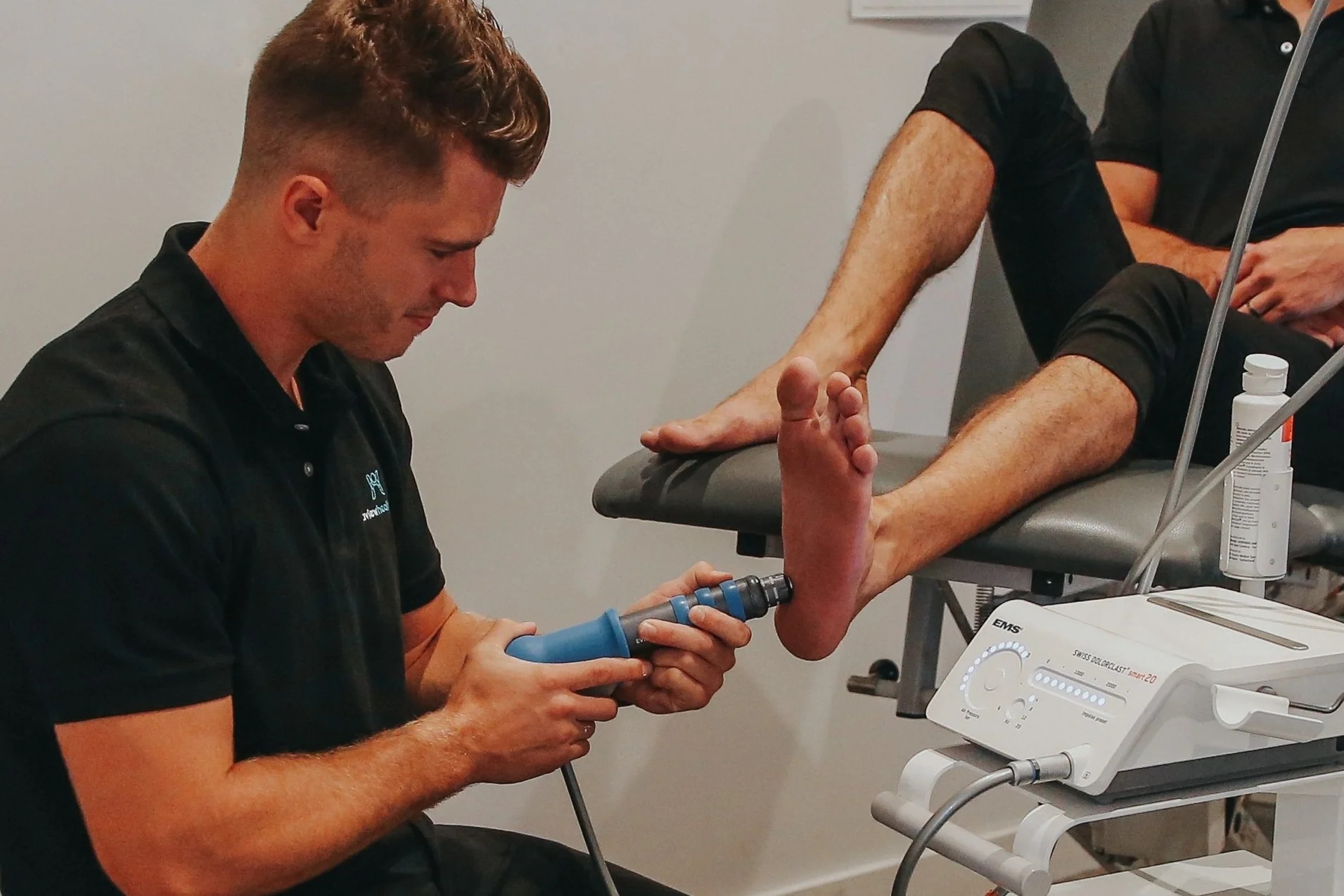
Hands-on care may be considered where appropriate. Seaview Health Group also offers shockwave therapy, which may be discussed for selected persistent problems; it is not a first step or a guaranteed answer for every painful heel. Your practitioner should explain why any treatment is being recommended and what you can do between appointments.
Get a plan for walking, work or running with less disruption from pain.
An assessment can help clarify what may be contributing to your heel or tendon symptoms. Book a consultation to discuss activity changes and a gradual way to rebuild your capacity.